Flatbed Towing
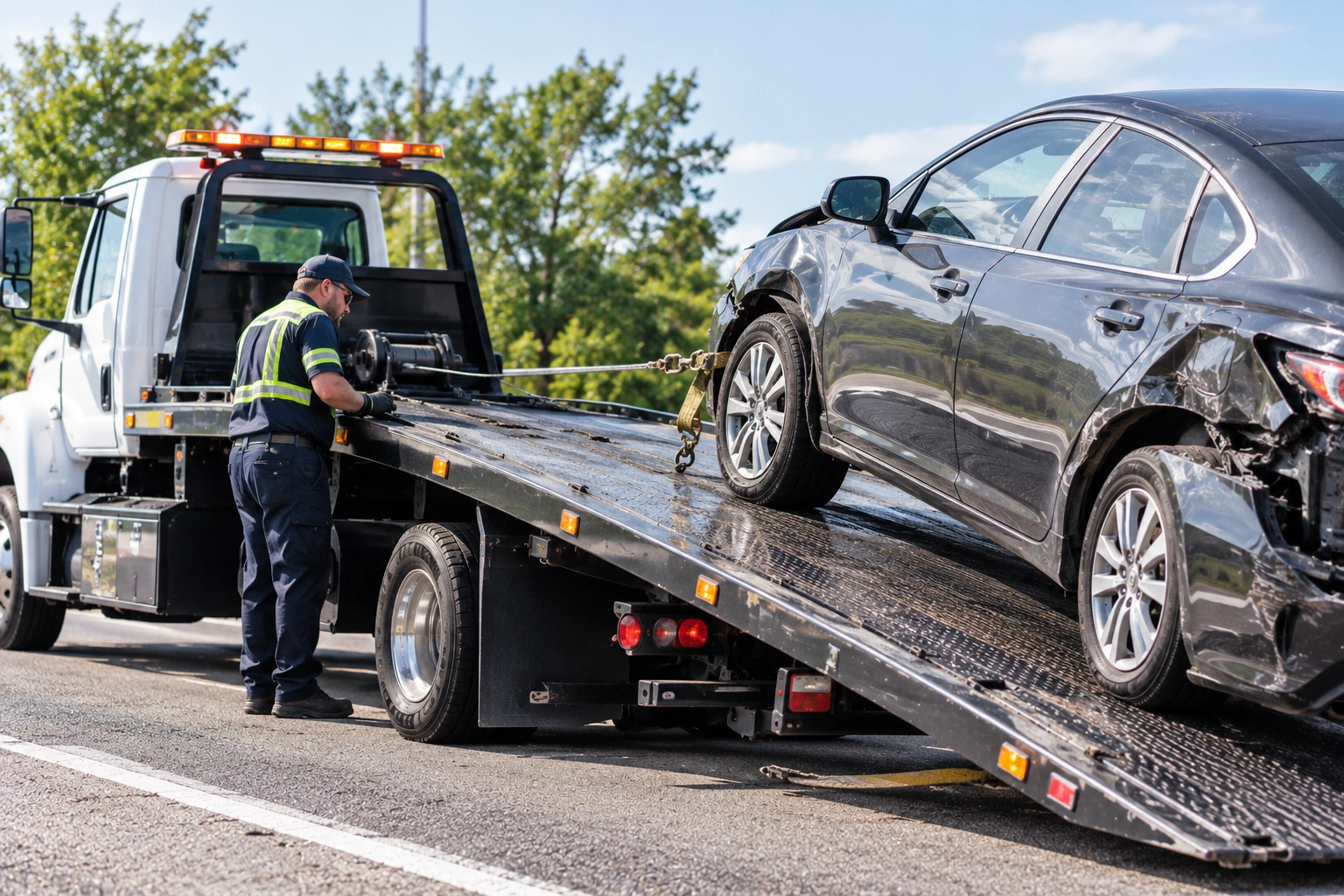
Flatbed transport for vehicles that shouldn't be towed on their own wheels — AWD, lowered cars, and anything already damaged.
Why a Flatbed Instead of a Standard Tow
A flatbed lifts the whole vehicle onto a deck rather than dragging it on two wheels, which is the only real option for all-wheel-drive and four-wheel-drive vehicles — towing those on their wheels can strain or damage the drivetrain. It's also the better call for lowered or modified cars, and for anything that's already taken damage in a wreck, since there's no risk of the vehicle scraping or shifting during loading.
Where Flatbeds Come Up Most
Beyond AWD vehicles specifically, flatbeds are the default for long-distance moves and most of our accident recovery work, where protecting an already-damaged vehicle matters more than usual.
Questions We Get
How do I know if my car needs a flatbed specifically?
Tell us the drivetrain (AWD/4WD or standard), the ride height, and whether it's already damaged — that's usually enough to decide.
Does a flatbed cost more than a regular tow?
Sometimes a little, depending on the vehicle and distance, but for the vehicles that actually need it, it prevents damage that would cost far more to fix later.
Can a flatbed handle a car that's sitting low to the ground?
Yes — that's exactly the situation flatbeds are built for, since a standard wheel-lift can scrape a lowered car during pickup.